Micron’s 9650 drive is the company’s first PCIe Gen 6 SSD in mass production. Engineers planning storage architecture now face a decision: “Which PCIe generation is right for my design?”

Micron’s 9650 drive is the company’s first PCIe Gen 6 SSD in mass production. Engineers planning storage architecture now face a decision: “Which PCIe generation is right for my design?”
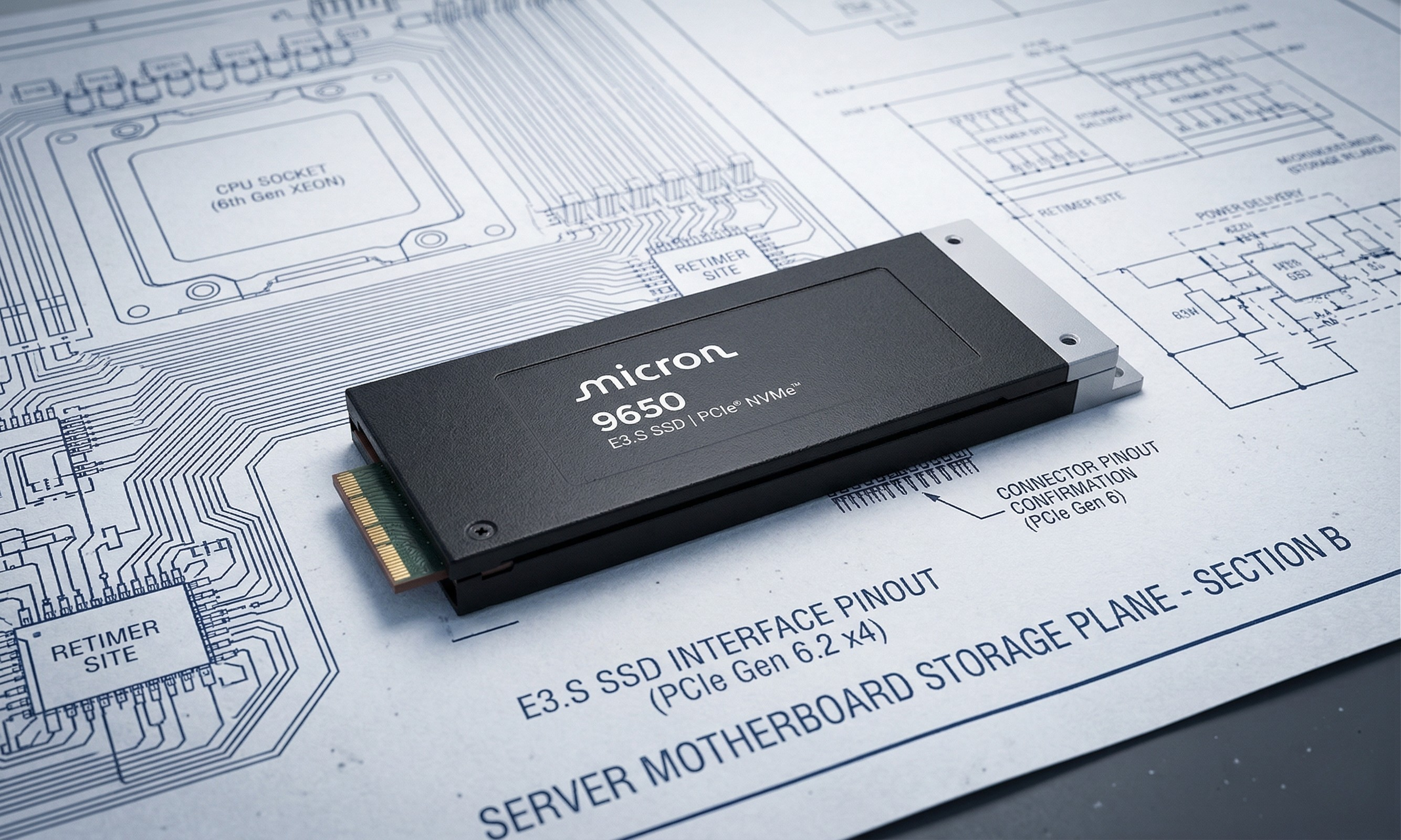
PCIe generation sets the throughput ceiling for a storage design. Moving from Gen4 to Gen5 roughly doubles available bandwidth, and Gen6 doubles it again. The Micron 9650 is the first PCIe Gen6 data center SSD in mass production, opening new performance options for AI training, inference, and high-density infrastructure.
This guide compares three Micron NVMe SSD families: the Micron 7600 for mainstream Gen5 deployments, the Micron 9550 for maximum Gen5 performance, and the Micron 9650 for Gen6 bandwidth. It covers specifications, workload fit, form factors, qualification, and procurement considerations for OEM and contract manufacturing programs.
Quick takeaway: Choose the 7600 when latency consistency and mainstream Gen5 efficiency matter most, the 9550 when you need peak performance on a mature Gen5 platform, and the 9650 when your validated Gen6 system can use maximum storage bandwidth.
NVMe SSDs connect to host systems through PCIe lanes. Each generation roughly doubles raw per-lane bandwidth, although real SSD throughput also depends on the controller, NAND architecture, firmware, workload, power, and thermal conditions.
| PCIe Generation | Per-Lane Bandwidth | Approximate x4 Bandwidth | Typical Deployment Era | Status |
|---|---|---|---|---|
| Gen4 | 2 GB/s | 8 GB/s | 2019 to 2023 | Mature and production-stable |
| Gen5 | 4 GB/s | 16 GB/s | 2022 to present | Active deployment |
| Gen6 | 8 GB/s | 32 GB/s | 2025 to present | Mass production with Micron 9650 |
PCIe supports backward-compatible link negotiation, but installing a newer drive in an older system does not guarantee complete platform compatibility. The drive may operate at the older link speed, and the system must still support the drive's physical form factor, connector, firmware, power, thermal, and signal-integrity requirements.
These three families address different points in the data center storage market. Maximum specifications vary by capacity, endurance class, and form factor.
The Micron 9650 is designed for systems that can use Gen6 bandwidth, especially AI training, inference, GPU data pipelines, high-performance computing, and other workloads that need exceptionally fast access to large datasets.
The E1.S option supports liquid cooling, while the E3.S option supports high-density air-cooled deployments. Start platform qualification early because Gen6 operation depends on the complete server architecture, not only the SSD.
The 9550 is the performance-focused choice for engineers who need maximum Gen5 bandwidth on widely deployed Gen5 infrastructure. It supports AI, high-performance databases, caching, online transaction processing, and other demanding workloads.
The 7600 emphasizes low latency, predictable quality of service, and strong performance per watt. It is well suited to databases, OLTP, cloud instances, virtualized systems, AI inference, web services, and mixed workloads where response-time consistency matters more than maximum sequential bandwidth.
| Metric | Micron 7600 | Micron 9550 | Micron 9650 |
|---|---|---|---|
| Interface | PCIe Gen5 x4 | PCIe Gen5 x4 | PCIe Gen6 x4 |
| Sequential read | 12 GB/s | 14 GB/s | 28 GB/s |
| Sequential write | 7 GB/s | 10 GB/s | 14 GB/s |
| Random read | 2.1M IOPS | 3.3M IOPS | 5.5M IOPS |
| Random write | 675K IOPS | 400K IOPS | 900K IOPS |
| NAND | Micron G9 TLC | Micron G8 TLC | Micron G9 TLC |
| Power | Typically 20W to 25W | Up to 25W | Up to 25W |
| Liquid cooling | No dedicated option | No dedicated option | E1.S option |
| Primary strength | Latency and QoS | Peak Gen5 performance | Maximum Gen6 bandwidth |
Values are maximum published figures and vary by capacity, form factor, endurance class, workload, and configuration. Confirm the specifications for the exact part number selected for your program.
Form factor compatibility depends on the host platform. Confirm the slot, connector, height, power, heat sink, serviceability, and cooling requirements before finalizing a drive.
| Form Factor | Approximate Dimensions | Available Families | Typical Fit |
|---|---|---|---|
| U.2, 15mm | 69.85 x 100.4 x 15mm | 7600 and 9550 | Broadly deployed 2.5-inch enterprise drive bays |
| E1.S, 9.5mm | 31.6 x 111 x 9.5mm | 7600, 9550, and 9650 | Hot-plug EDSFF; 9650 offers a liquid-cooling option |
| E1.S, 15mm | 31.6 x 111 x 15mm | 7600 | Mainstream EDSFF deployments requiring additional heat-sink volume |
| E3.S 1T, 7.5mm | 76.1 x 112.75 x 7.5mm | 7600, 9550, and 9650 | High-density, serviceable enterprise storage |
| Primary Requirement | Recommended Drive | Why It Fits |
|---|---|---|
| Maximum AI training and inference throughput on a validated Gen6 platform | Micron 9650 | Maximum bandwidth and IOPS with Gen6 |
| High-performance AI and HPC on established Gen5 infrastructure | Micron 9550 | Peak sequential and random-read Gen5 performance |
| Latency-consistent OLTP, databases, and mixed workloads | Micron 7600 MAX | Predictable QoS with mixed-use endurance |
| Read-intensive cloud and analytics with strong power efficiency | Micron 7600 PRO | Mainstream performance and power efficiency |
| Highest capacity in this Gen5 comparison | Micron 9550 PRO, 30.72TB | Maximum capacity with high Gen5 performance |
| Multi-year deployment plan built around Gen6 infrastructure | Micron 9650 | Gen6 performance with PRO and MAX options |
Selecting the drive family is only part of the decision. Production programs also need to account for platform qualification, lifecycle, security, compliance, and supply.
Confirm lifecycle expectations, forecast timing, firmware requirements, and the exact production part number before qualification. Edge can help align the selected configuration with the program timeline.
Qualification should cover link speed, firmware and BIOS support, I/O compatibility, power, thermals, signal integrity, security, and the physical drive carrier or bay.
SED, FIPS 140-3 Level 2, TAA, SPDM, and related options vary by family and part number. Review the exact configuration rather than assuming every combination is available.
The 9550 provides broad OCP 2.0 support with OCP 2.5 telemetry capabilities. The 7600 and 9650 move to OCP 2.6 features for current data center management and security requirements.
For a broader introduction to SSD technologies, see Edge's comprehensive SSD guide. For government and defense programs, review Edge's TAA-compliant Micron SSD information.
Tell Edge about your host platform, workload, capacity, form factor, security requirements, and production schedule. Our team can help identify the appropriate drive family and available product variant.
Request Technical Help and PricingEdge Electronics is an ISO 9001-certified, Certified Women's Business Enterprise and authorized Micron distributor serving OEMs, contract manufacturers, government agencies, and engineering teams.
Edge's in-house Field Application Engineers support product selection, platform qualification, transition planning, and long-term production programs. Micron has recognized Edge FAE Keith Peterson for outstanding technical support.
Use Edge's authorized distributor's guide to Micron SSDs to compare additional enterprise and client families.
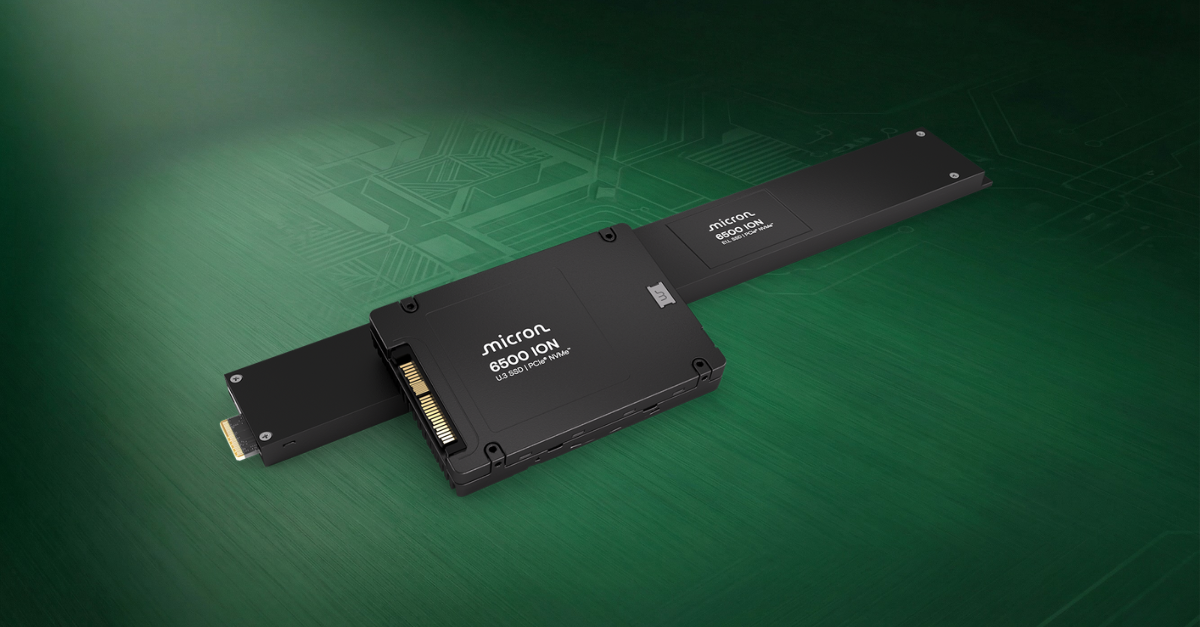
The Micron 6500 ION is heading toward EOL, and it's time to look at what's next. The answer depends on where you are in your product life cycle.
Topics: Storage
When your system depends on reliable data storage, the last place you can afford risk is in your supply chain.
Yet too often, procurement teams are left juggling availability issues, uncertain warranties, or suppliers who simply move boxes.
If you're sourcing Micron SSDs, choosing an authorized, high-service distributor like Edge Electronics isn't just about compliance. It's about stability, support, and partnership.
Topics: Micron, Memory, SSDs, Authorized Distributor, Storage
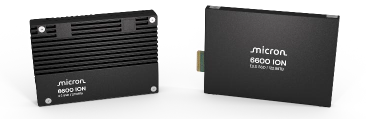
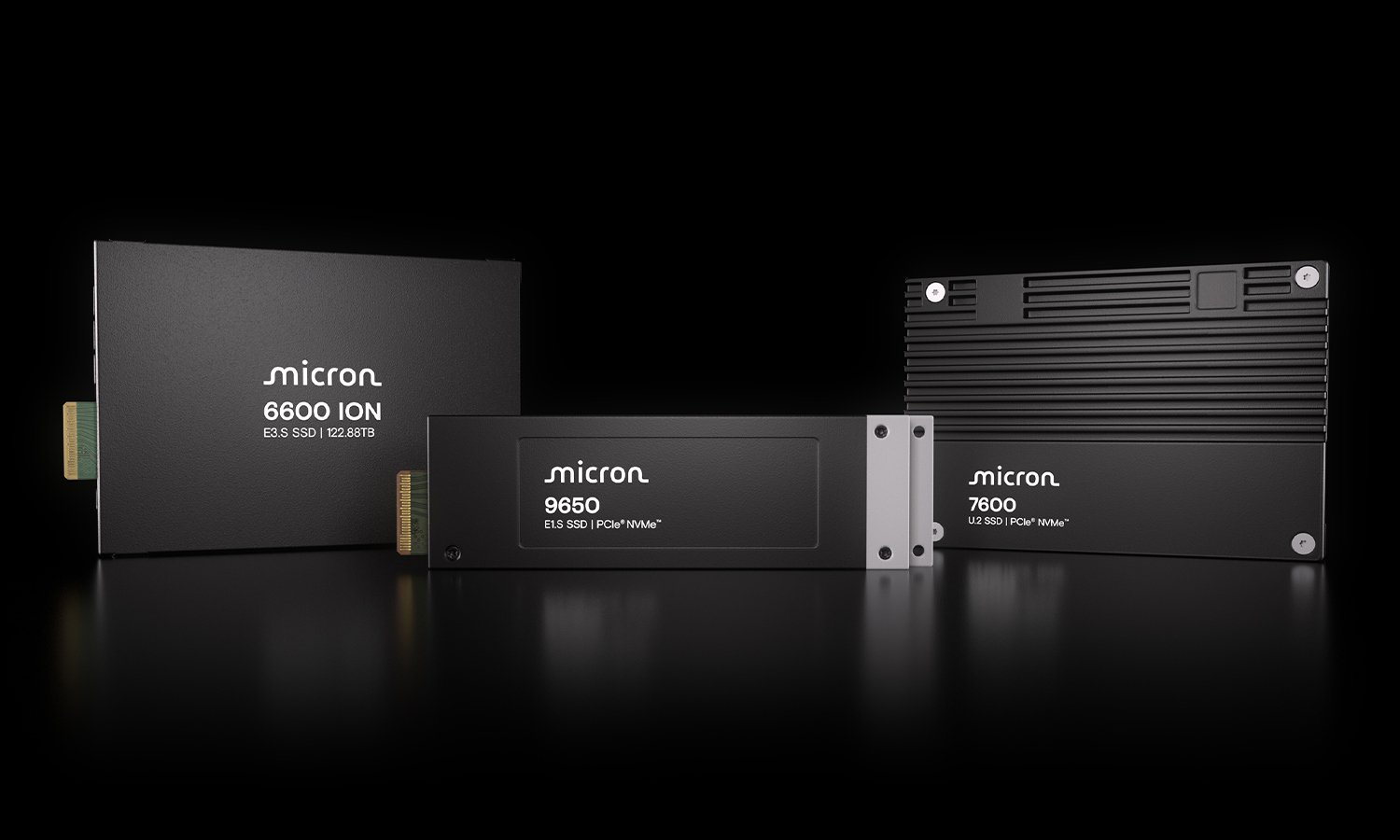
Enterprise IT teams and infrastructure architects face explosive growth in data from AI, cloud, and big data applications. Traditional storage solutions can't keep up with the density, scalability, and efficiency required in today's data centers. To meet these challenges, Micron announced its upcoming 6600 ION SSD series, led by its innovative 122TB drive, a breakthrough that redefines what's possible in enterprise storage.
As an authorized Micron distributor, Edge Electronics is your trusted source for this next-generation SSD technology. We'll help you understand who should consider the 122TB drive and why it delivers unmatched advantages for modern data operations.
Topics: Micron, SSDs, Authorized Distributor, Storage

As technology keeps advancing, it's no surprise that Micron continues to roll out new solutions to meet the growing needs of modern data centers.
Topics: Micron, SSDs, Authorized Distributor, Storage
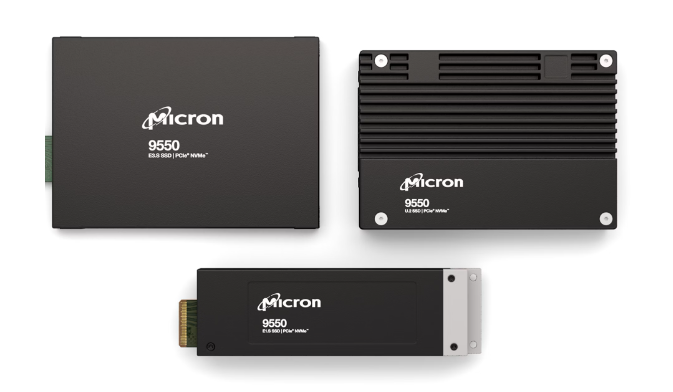
Micron recently announced that the Micron 9400 series is approaching end of life (EOL). The series will be replaced with the upcoming Micron 9550data center SSD.
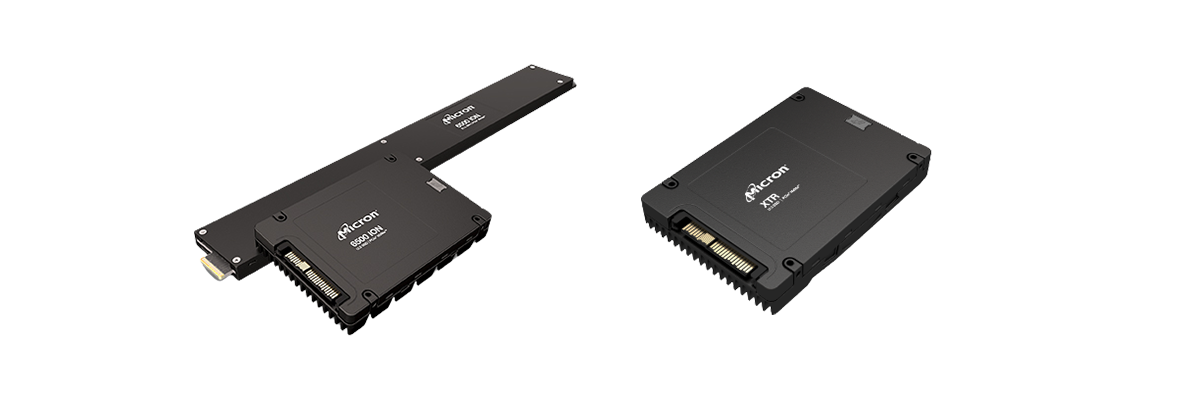
The latest solid state drive (SSD) releases from Micron - the 6500 ION and the XTR - are both high-performance and high-efficiency NVMe SSDs.
Combining the two enables data centers to reliably scale their storage, control their operating costs, and improve their environmental sustainability.
Micron recently announced that the new 9400 NVMe SSD is in production as of the beginning of 2023. This drive will serve as the replacement to the previous 9300 series that is EOL (end of life) as of 2022.
Around the turn of the century disk drive manufacturers started the transformation of previous disk drive interfaces to SATA. If your application was boot drive or system disk, the choice for interface for one drive would be SATA. In 2008, advancements had been made on the SATA interface to reach speeds of 600 megabytes per second (MB/s) which was referred to as SATA III.